She Can Laugh at the Days to Come

40 at dawn.
May 25, 2026.

I lived on the coast for 25 years and consecrated many moments by the sea. Big public ones: my baptism in the leftover surf of a hurricane in 2005, the sunrise of my 25th birthday, a paddle-out funeral.

Small, private ones: aging friendship, first dates, the death of a leader, falling in love, letting go of a dream. Job changes, risks taken or tossed, the weight of responsibility for my own pain or the pain I’d caused another. 

I’ve washed the wounds of false intimacy, broken boundaries, unrequited love, old trauma, and missed opportunities in brine. I’ve set grudges on the tide and watched them wash out, wave by wave.

I’ve explored my fear of death, insignificance, nothingness, and powerlessness. I’ve trembled, stripped bare but gradually steadied, like old coastal trees. Dissociation breaks down in salt air. Sadness dissolves into something cleaner and makes room for energy and courage.

I’ve played. Played hard, the same as I did at 10, no matter my age. I’m not letting that go. When I go to the water to process or celebrate or align or release, I return changed for the better.

35 wrecked me. I knew then if I didn’t do the work, 40 would break me. Five years didn’t seem like enough, but I could ignore it or embrace it. When the calendar day came, there was only one place to be.  

The timing was terrible, as my husband and I had just closed on our first home 940 miles from that One Place. Anthony’s great gift to me was sending me to the sea while he wrapped up the move alone. It was more than he bargained for, but still he called and texted to make sure I didn’t miss the sunrise. I was already in the water.

I felt the tide turn in my whole being. One era ended, another began. I looked back on all I knew of life and was astounded it fit into just four decades.

The water was not warm, but I let it slap me in the face. I gathered up all the richness and beauty and wonder of my years in gratitude. I released the failure, the ought-to-have-been, the disappointment and loss to the waves. The water knocked me onto my back into a birthing position. I released my childlessness too.

The water pushed me forward into a kneel just as the sun rose over the storm offshore. I spread my arms and hands into the foam and welcomed this new era, all the unknown wildness of it, the mortality and uncertainty and the total lack of a script. A fever of joy broke over me, the precipitation of a transformative touch from God. I laughed.  

What a beginning.

“She can laugh at the days to come.”

On My Side

June 2026.
Two years later, this piece needs a preface.

I am not among the ranks of those mighty souls who have survived infertility and/or child loss. However, this demographic taught me to face the reality of what is, grieve what is not, and open my whole self to what can be.

No one can teach that lesson like them. To our detriment, we rarely listen.

Pregnancy has not yet proven impossible for me, though at 40, it is no longer the obvious next chapter. For many, it remains the ultimate mark of meaning and providence for a woman. We’re raised to take motherhood for granted. I was told to just wait, keep high standards, and God would bring along the perfect man when I least expected. By the time I was in my late 20’s and still unmarried, I heard lots of “it’s never too late” and “God’s timing is perfect.”

While well-intended, one statement is false, and the other a dangerous oversimplification.

Here’s what I would tell younger Me instead: “If you want a family, actively pursue one. Move to a city with diversity and good jobs. Date around (wisely). Don’t self-isolate and make God do the rest. Get over your fear of heartbreak. Most importantly: if it doesn’t come together, your life still holds the same value, can still be full of purpose and joy.”

It can be brutal work to believe that last part.

The Childless Collective has my regard and respect forever.  Their work has helped me learn that I can swim in the open water of the unknown, the unplanned.
I can laugh at the days to come.

April 2024.
Palmetto trees are everywhere in Charleston. They spread a sunny welcome over the entrance to the Camden Room, the gorgeous event space in the heart of town. I was there for the first conference I’d ever gone to alone, unaffiliated with work or school or ministry. I knew no one there. This was just for me, a luxury but also a painful, therapeutic risk. It was the first in-person summit of The Childless Collective.

I resisted the urge to form expectations. I knew in my marrow I needed to be there, and that feeling has never been wrong.

I passed through the heavy doors into the great room, already full of attendees. I’d never seen a more striking group of people. There were adults of every shape, generation, color, and gender. I felt the glow of their collective presence on my skin.

The whole room had this in common: our answer to the question, “Do you have kids,” was a layered, complex “No.” Many of us had never publicly, much less collectively, declared this. Turns out all of us felt we needed to be there. None of us were wrong.

Two months earlier, an iron gong struck my chest awake at 2am and brought immediate clarity: I needed professional help. There was focused work to be done.

The possibility of a childless future could wait no longer. I was frozen, unable to grow in my personal or professional life until I met this head-on. The desire to heal is beyond the desire to be happy. It is a drive to be whole, to be on healthy terms with reality in whatever form it does (or does not) take.

I Googled the words “childless” and “support.” The Childless Collective was one of the first links. As I scrolled I found honesty, sanity, and even hope. Better still, this hope was that rare kind that doesn’t depend on an outcome. It just is, like sunlight.

When I saw there was a summit in Charleston two months off, I immediately knew I would be there. Thank God I went through with it.

In preparation for the conference I began the book Living the Life Unexpected by the keynote speaker of the summit, the marvelous Jody Day. She’s the founder of Gateway Women, a renowned network of childless women all over the world. The Childless Collective is under that umbrella.

Jody’s intelligence, experience, and humor are as present in her writing as they are in her voice (this Ted Talk of hers, called “The Lost Tribe of Childless Women,” is worthwhile). Her book extended a strong, reliable hand to guide me forward into the work of grief. Disenfranchised grief. Existential dread. I found the courage to examine my fears about childlessness. Week after week I read in the fetal position while deep transformation began.

One thing Jody said at the summit is key: As I age, I’m so grateful to have grief on my side.

Grief… on my side. An ally, an aide. Not just a measure of damage done, or an obstacle to recovery, but the most powerful means we have to heal. As a child I learned to fear grief as an archenemy, an adversary to outrun. It was inextricably linked with despair. To understand grief instead as a thing to embrace, lean into, even rely on? Something to trust? This is revolutionary.

It is deliverance.

All my life I’ve treated grief like vomiting: necessary to rid the body of illness, but best to avoid until all else fails. It must be gotten over with as quickly as possible, as it can cause irreparable damage. Some aspects of grief, especially related to trauma, are a vomit-like purge, an intense expulsion that leaves you an exhausted mess.

I didn’t know it could also be quiet surrender, a willingness to rest. It can be an intimate embrace of the truth, to lean forehead-to-forehead with the facts after railing against or running from them for so long. Before, I only understood grief as that which takes us to the bottom. I didn’t realize it can also be what lifts us again.

This is not to diminish the raw, gaunt journey so many of us have to stumble through. I only mean to share that, by dreading grief in all its forms to the point of avoidance, I have kept myself safe from so much life. It’s liberating to learn that I don’t have to do that anymore.

Grief can come as a transition instead of a destination. It is a powerful current, and that power rightfully frightens us. But that current can move us beyond where we fear to be stranded.

I can’t believe the new life that sprouted when I began to lean – just a little at a time – toward, rather than away from my grief. Tori McClure, a phenomenal human who rowed across the Atlantic alone, said this: “I am, after all, a woman. We don’t slay our dragons; we embrace them.” Her big dragon was Helplessness. Grief has always been one of mine.

I had no idea it could be on my side.
Taller

The mausoleum was a small rectangular room with the deceased stacked five high and fifteen down on either side. The interior was the same dusty blue I remembered. The business-like glass entrance was the only light source. I stood wedged in the heavy door like a cat who’d changed her mind halfway. To open the door even an inch created a vacuum that gave me rigor mortis.

Two rickety industrial fans in the back tried their best to cool the August heat but only blew dry dust. Old, overly formal chairs, small tables with stiff doilies, and mounds of faded fake flowers waited to serve the bereaved. Unopened notes were everywhere.

A stale, strangely Baptist cloud of emotional repression smothered me as I scooted in. Had the door not been propped open an inch – I made sure the stopper was secure – I would never have made my way to the back of the room to find her.

I’d only come there twice, but I knew how far down the room to go, which side, and how far up the wall to look. Some things stay with you.

So where was she?

I paced back and forth, looking for the little dinosaur plaque. She wasn’t there. My God, did they move her? My claustrophobia boiled into panic, but just as I turned to go, I realized: I hadn’t been there in over twenty years. When, in fact, was the last time? Was I ten? Or seven? Maybe I had only come once. There’s no denying I’m taller than we were when we were seven. I made one more scan of the wall with my eyes lowered to the bottom two rows.

There she was.

Surely they’d moved her down. I got on my haunches and touched the name, the dinosaur plaque shaped like a longneck. My little friend, my spark-plug-spirited classmate, in here with a bunch of old people. As my focus shifted to her, discomfort evaporated, and a deep shift began.

She wasn’t there.

As a child I felt we’d just left her unable to grow or move or breathe, stuck in an inexorable sleep and sealed up in a box. I still got to play outside and have Christmas and summers and McDonald’s. I got to see Jurassic Park in the theater.

While I believed the innermost part of her was beyond the clouds, where she could ask God in-person about science and dinosaurs and have endless recess, I’d seen her remains powdered and put away. Her little form was just like mine. I remember her hands the most, down to the cuticles. It was impossible to reconcile.

As kids do, I accepted this was the way of things, and buried it deep within myself. Come to find out I’d buried part of myself with her, and that part was unable to grow or move or breathe, stuck in the inexorable sleep of trauma, sealed up in a box. No wonder I’d expected things to be as far down the hall and as high above my head as they were when we were seven.

But they weren’t. I was taller.

An unexpected fellowship with her warmed in me as her absence from that vault became real to my senses. She had moved on from there long ago. So could I.

As I left the mausoleum, it was as if she took my right hand while I hoisted my rescued little-girl-self onto my hip. Together, we walked back into to the living air of summer.

For Elyn Jean Davis 🦕 Resurgam

The Last Time

“One day you and your friends played outside for the last time and none of you knew it.”
-a meme

It was the last day of school and all but two of us had been picked up. The sun had thawed the schoolyard into a hotbed of clover and new grass. A few crickets warmed up for their summer songs. It was good to know the playground wouldn’t be silent after we’d gone. Heavy thought for a fifth-grader, but that day, my little class had the rare, bittersweet privilege to know that we’d played outside together for the last time.

Our hands still smelled like the metal and old paint of the monkey bars, and we’d scored a few good grass stains.  Amanda and I waited for our rides and didn’t say much. I sat on the railing, she made circles in the grass with her toe. We kept in each other’s peripheral and watched the world like two dogs on a porch, fully present but without comment.

Her grandmother pulled up and she set off with that universal, automatic bound of a kid headed home from school: blank expression, jacket half off, backpack bouncing. A swell of importance squeezed my chest, but no noise came out. Apparently it got her too, because she turned and said: “I love you!” We’d never said that before. Suddenly it wasn’t awkward for buddies to say. “I love you too!”

That’s when I knew: childhood was over.

With the flick of a switch we were young women, parted for the foreseeable future, but the bond of growing up together would remain. Nothing else needed to be said.

My eyes followed the ridged horizon west, and I was grateful for a moment longer to take it all in. We had been a small class for six years. For a kid, that’s a lifetime. One of us died in the 1st Grade, and her loss knit the rest of us, kids and parents and teachers, into extended family.

Back then, we hadn’t imagined puberty or adulthood with any other set of people, or school in any other building. With a wave of change, primarily with parents’ jobs, we were about to disperse like dandelion seeds.

Toward the end of that schoolyear we shared happy memories of field trips and birthday parties and sleepovers while we romped around, sentimental but still blissfully ignorant kids. There were fewer squabbles, more arm-in-arm walks during recess. Our teacher hugged us more. We actually wrote notes in each other’s yearbooks.

We knew we wouldn’t all reunite in the fall and compare new school supplies and backpacks. We wouldn’t pick our usual seats and inhale the weird, wonderful scent of textbooks that didn’t smell like us yet. We wouldn’t measure our changing shoe sizes or have to adjust to each other’s fresh haircuts. We wouldn’t write little letters on notebook paper, sharpen our pencils out of boredom, line up to go everywhere, talk about the latest Disney blockbuster.

There have been times I felt relief not to know when my interaction with someone was the last. Moments can be snuffed out by anticipatory grief. In this case, I’m deeply grateful we knew it was goodbye. I still feel the warmth of that moment on the sidewalk at the end of the fifth grade. It’s a place to return when I need to recall what I left behind that summer. I also return to remember what I’ll never lose.

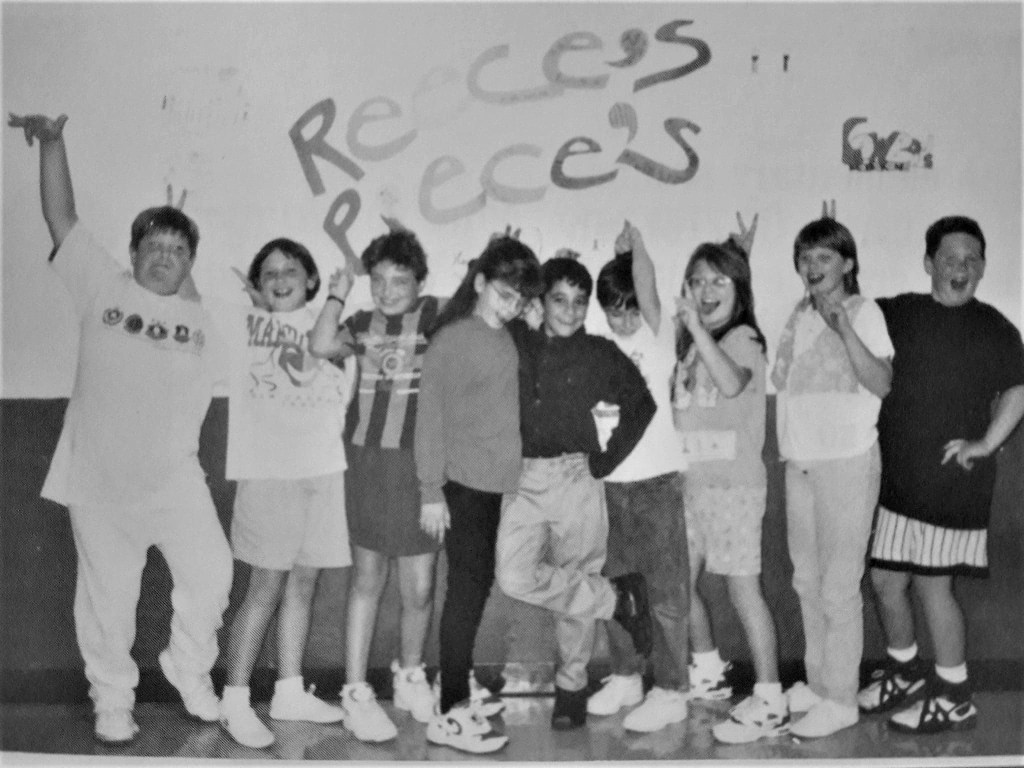
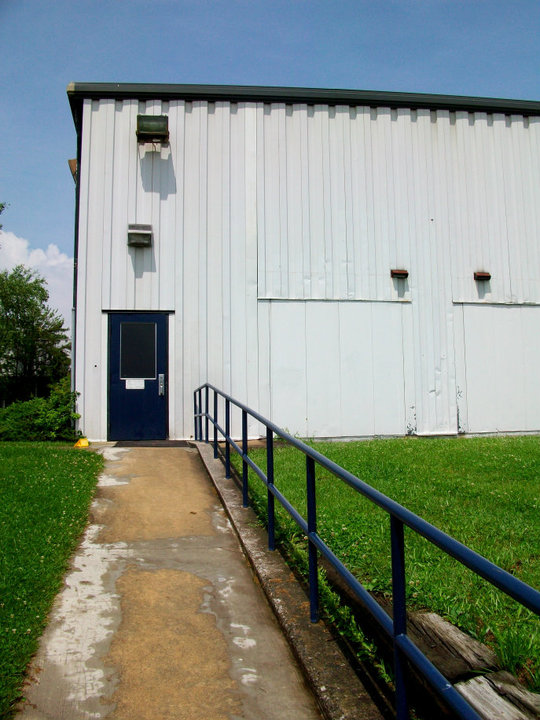
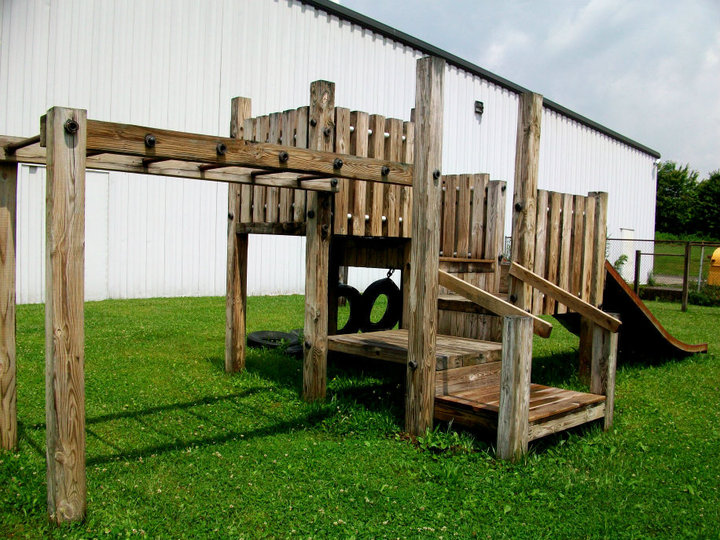
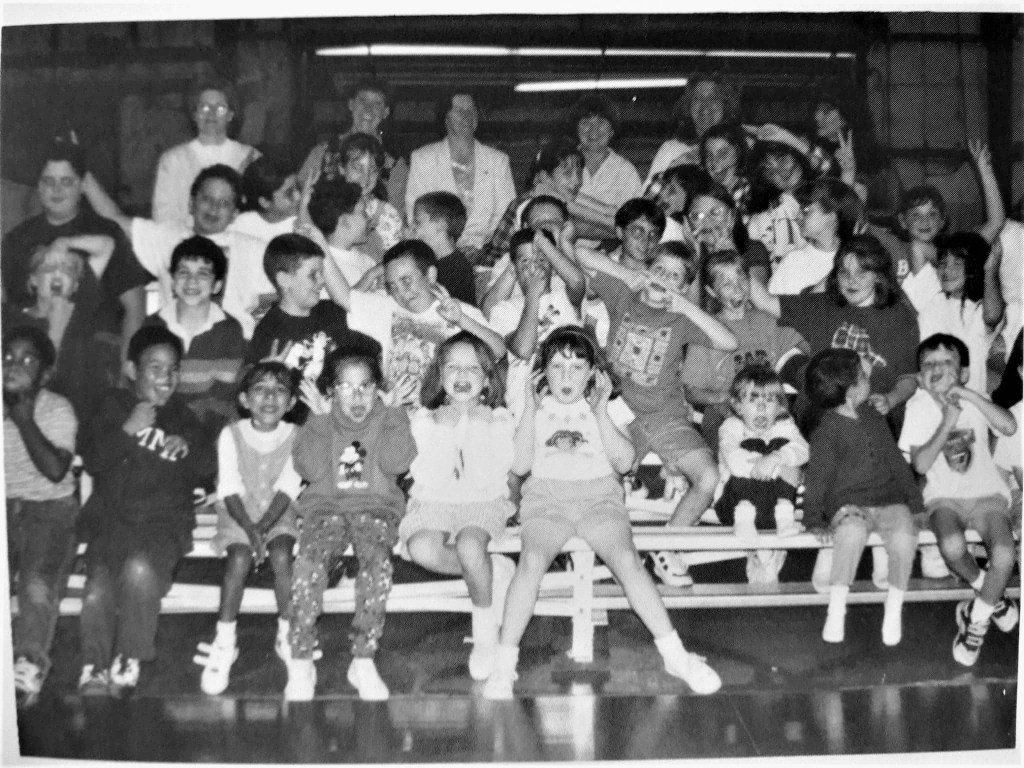
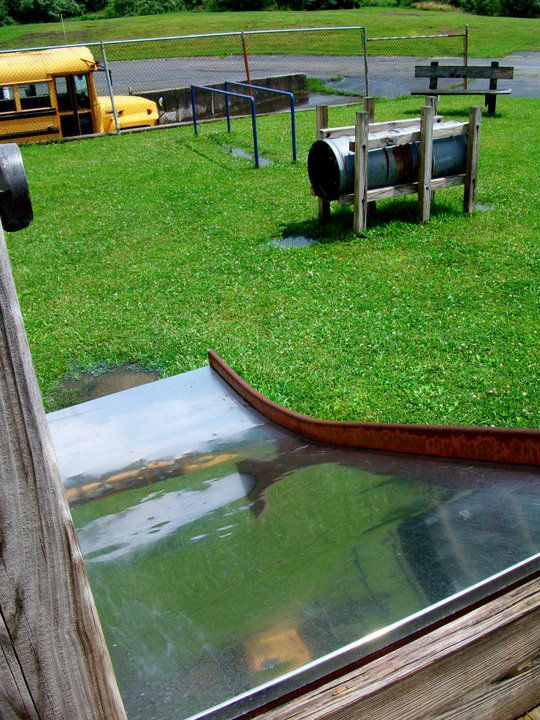
Get a load of these mid-90’s monkeys, the wonderfully unsafe playground, and that lovable former warehouse that was our school.